

Best 5 Commercial Coffee Grinders for Cafes & Baristas
That first grind of the day at a busy cafe has great spiritual significance. The grinder starts everything: the scent of new beans, the gentle hum of a strong motor, and the expectation of the first espresso shot.
Not your shiny espresso machine (as much as I love them), not your barista’s latte art skills-it’s the grinder that makes or breaks the shot. As someone who has spent over 15 years behind the bar setting up cafe workflows and even helping friends open their own espresso spots.
If you’re looking for the best commercial coffee grinder, then this article is for you, whether you’re renovating an old cafe or launching a new one. From burr types and motor strength to real-world use cases, emotional frustrations, and the sweet satisfaction of at last discovering the perfect grinder. We will walk you through everything you need to know. Let us grind this out.
 best commercial coffee grinder
Table of Contents
- Importance of Good Coffee Grinder
- An excellent commercial grinder provides:
- What Actually Makes a Grinder Grade Class “Commercial”?
- 1) High-Duty Motor
- 2) Quality & Burr Size
- 3) Grind Velocity
- 4) Programmability
- 5) Ease of Maintenance
- Top Features to Search for in the Best Commercial Coffee Grinder
- Our Top Picks: Best Commercial Coffee Grinders
- 1) Mahlkönig E80 Supreme (The Powerhouse Performer)
- 2) Mazzer Major V: The Great Workhorse
- 3) Fiorenzato F83E Pro – Precision Meets Elegance
- 4) Baratza Forte BG – Compact Brilliance for Brew Bars
- 5) Anfim SPII+ – The Quiet Champion
- How to select best coffee grinder for commercial use?
- Emotional Side of the Grind: What Consumers Ignorantly Miss
- Maintenance Advice to Keep Your Commercial Grinder Running Perfect
- Often Asked Questions (FAQs)
- 1) Best kind of burr for espresso?
- 2) How often i have to change my grinder burrs?
- 3) In a business environment, can one grinder run espresso and filter coffee?
- 4) For espresso, what grind settings shall i use?
- 5) Shall I purchase a used commercial grinder?
Importance of Good Coffee Grinder
Imagine this: It’s 8 AM in the morning. There is a big line out the door. Your barista generates a poor, under-extracted, nasty shot, and bang! Your client gets angry, and you simply lost the enchantment of their morning.
It’s because your grinder’s performance varied. Perhaps your machine overheated following back-to-back orders, perhaps the burrs are worn out, or perhaps the grind size was uneven. In the business world, inconsistency cannot exist.
An excellent commercial grinder provides:
- Precision in grind size change
- Speed during rush hour
- Durability for years of everyday use
- Consistency, shot after shot
Your grinder is the fuel injector if your espresso machine is the engine; if it splutters, the whole system collapses.
| Rank | Grinder | Key Features | Best For | Rating | Buy Now |
|---|---|---|---|---|---|
| 1 | Mahlkönig E80 Supreme | 80mm flat burrs, whisper-quiet, ultra-fast grind | High-volume specialist cafes | 5/5 | Buy on Amazon |
| 2 | Mazzer Major V | 83mm flat burrs, stepless grind control, robust build | Espresso-oriented cafes | 4.5/5 | Buy on Amazon |
| 3 | Fiorenzato F83E Pro | 83mm titanium-coated burrs, touchscreen, precise dosing | Tech-savvy cafes | 5/5 | Buy on Amazon |
| 4 | Baratza Forte BG | 54mm burrs, weight-based dosing, compact design | Brew bars, pour-over stations | 4/5 | Buy on Amazon |
| 5 | Anfim SPII+ | 75mm titanium-coated burrs, low retention, quiet operation | Medium to high-volume espresso shops | 4.5/5 | Buy on Amazon |
What Actually Makes a Grinder Grade Class “Commercial”?
We are not discussing your home grinder here. Commercial coffee grinders built for efficiency, precision, and longevity. Their differences from the others lie in this:
1) High-Duty Motor
Your motor must be able to pound hundreds of grinds a day without overheating or slowing down. Look for grinders having: 1) Motors with thermally protected protection 2) High torque for continuous grind speed and 3) Low RPM options (to lower heat)
2) Quality & Burr Size
Although most commercial grinders utilise flat or conical burrs. But just the shape does not matters here.
-> With espresso, flat burrs are renowned for their consistency and clarity.
-> Though they generate less heat and are quieter, conical burrs can occasionally yield quite erratic particle sizes.
-> Larger burrs (65mm and above) improve heat control and speed grinding.
Additionally important are materials like hardened steel or titanium-coated burrs survive longer and remain sharper.
3) Grind Velocity
Speed relates to workflow rather than only performance. Peak hours call for a barista waiting 15 seconds for a single espresso grind, which is not at all desirable.
Usually running in 2-4 seconds, commercial grinders generate 18-21 grams of coffee and that is efficiency.
4) Programmability
You want a grinder that lets many baristas operate smoothly, remembers your grind dosages, and adjusts on demand. Game changers are timed dosage, customisable buttons, and on-demand grinding capabilities.
5) Ease of Maintenance
In a cafe, time functions as money. Look for easily accessible burrs, basic cleaning tools, and easily available parts. Trust me; you wouldn’t want to be disassembling a grinder for thirty minutes when you’re in the weeds.
Top Features to Search for in the Best Commercial Coffee Grinder
| Feature | Importance |
|---|---|
| Burr Type & Size | Bigger burrs -> faster and cooler grinding |
| Motor Power | More power -> less strain and more consistency |
| Grind Settings | Micrometric or stepless settings are ideal for espresso precision |
| Speed & Volume | Needs to keep up during rush hours |
| Build Quality | Stainless steel or aluminium casing resists wear |
| User Interface | Touchscreens and dose programming save time |
| Noise Level | Especially important in small or indoor cafe settings |
| Hopper Size | Large hoppers -> less refilling |
| Footprint | Fits your counter space efficiently |
Our Top Picks: Best Commercial Coffee Grinders


These are amazing commercial grinders I have either tested, owned, or suggested over the years.
Selecting the correct grinder is about discovering the one that best suits the rhythm, vision, and energy of your cafe. My top five choices are here, each examined with both technical knowledge and real-world testing experience. They will help you whether you manage a slow brew cafe or a high-volume espresso bar.
1) Mahlkönig E80 Supreme (The Powerhouse Performer)
The Mahlkönig E80 Supreme is your dream machine if you own a busy cafe and require a grinder that won’t flinch during an early rush. It generates exact grinds in seconds using 80mm flat burrs and a very efficient motor without overheating or jet engine sound.
I recall the first morning I tried it: in 2.4 seconds I pulled a flawless double. With the kind of performance that keeps your baristas cool under duress, it is smooth, strong, and consistent. This is the gold standard for serious specialized cafes.
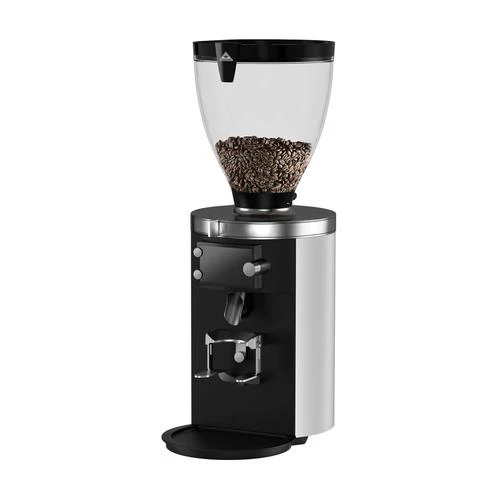
Rating: 5/5
Effective For: High volume specialist cafes
Pro Benefits: Quick blazing, incredibly consistent grind, whisper-quiet operation
2) Mazzer Major V: The Great Workhorse
As a barista, Mazzer is the grinder brand I grew up with. Currently the Major V grinder carries that legacy. Its heavy-duty engine and 83mm flat burrs help it to resist lengthy lines and demanding hours. Its stepless grind control lets you exactly dial in espresso. Its calm strength-day by day, shot by shot, it delivers what I most value. This grinder won’t let you down if your cafe is founded around espresso and you respect consistency and lifetime.
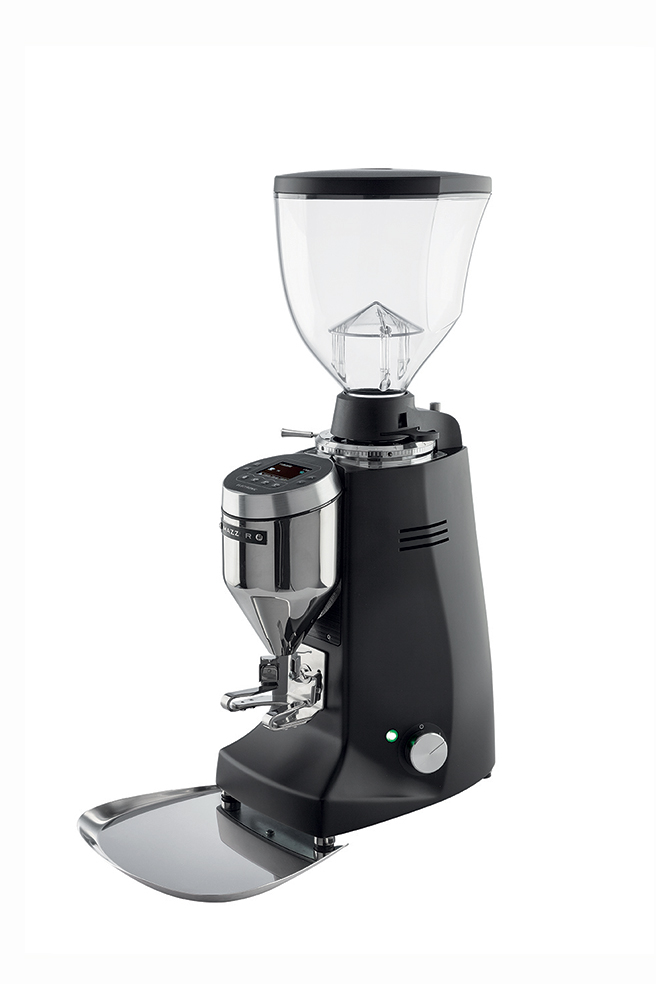
Rating: 4.5/5
Best For: Espresso-oriented cafes
Strengths: Stepper change, robust construction, consistent grind quality
3) Fiorenzato F83E Pro – Precision Meets Elegance
The Fiorenzato F83E Pro is a magnificent piece of coffee equipment, sleek, easy-to-use, rapid. It gives your coffee station intellect as well as beauty with 83mm titanium-coated burrs and a crystal-clear touchscreen.
The way baristas are friendly-you can follow your metrics, lock in dosage settings, and easily dial in a shot is fantastic. It elevates your bar workflow rather than only grind coffee. This is your ideal fit if your cafe is focused on style and accuracy.
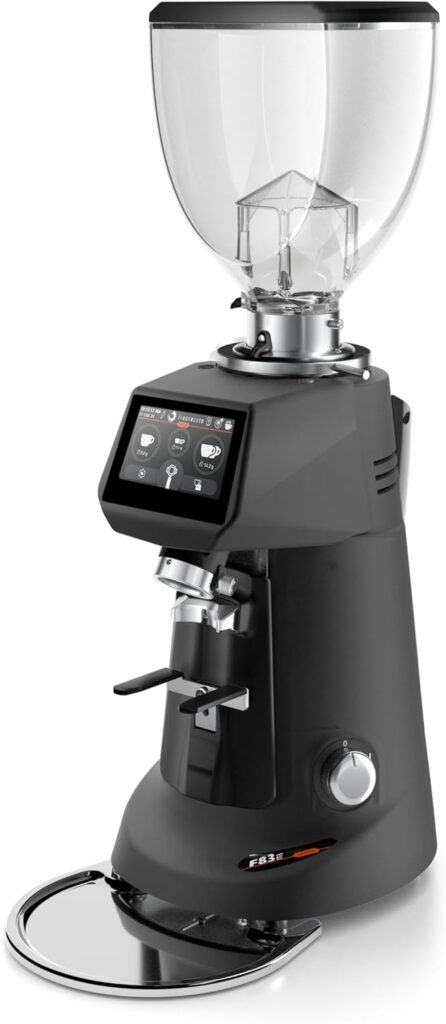
Rating: 5/5
Best For: Tech-savvy cafes with high standards
Pro Strengths: Touch screen interface, titanium burrs, very consistent output
4) Baratza Forte BG – Compact Brilliance for Brew Bars
One subtle overachievement is the Baratza Forte BG. Made especially for brewed coffee, this grinder performs best in batch and pour-over brew systems. Despite its smaller 54mm burrs it generates almost perfect grinds with virtually minimal mess.
With every batch, its weight-based dosing technique keeps taste integrity. I find it to be a delight-clean, consistent, and tough-used for batch brews and V60s. This grinder is the one you want if you have little space but yet wish cafe-level consistency.
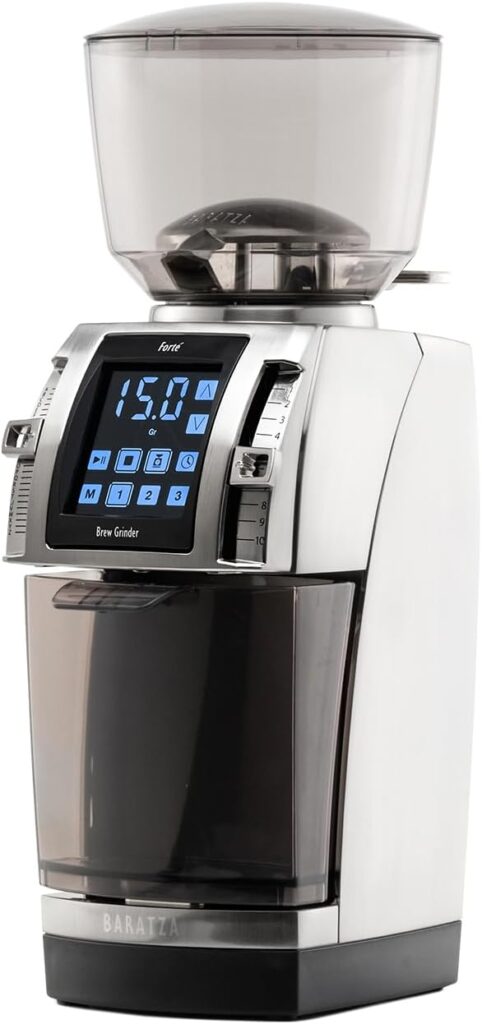
Rating: 4/5
Best For: Low-volume espresso bar, pour-over stations, brew bars
Pro Benefits: Weight-based dosing, space-saving, consistent for drip or filter
Read complete Review of Baratza Forte BG and AP models on our site.
5) Anfim SPII+ – The Quiet Champion
The grinder you suggest to close friends is the Anfim SPII+. It’s robust but subdued, enduring but elegant. It offers great espresso shots without flaws using 75mm titanium-coated burrs and almost 0% grind retention. Its smooth operation sticks out most; it silently completes the task even in the busiest of hours.
Though it lacks flashiness compared to the Fiorenzato or Mahlkönig but it has its own. I refer to it as the “quiet champion” since it just keeps precisely and without drama always grinding.
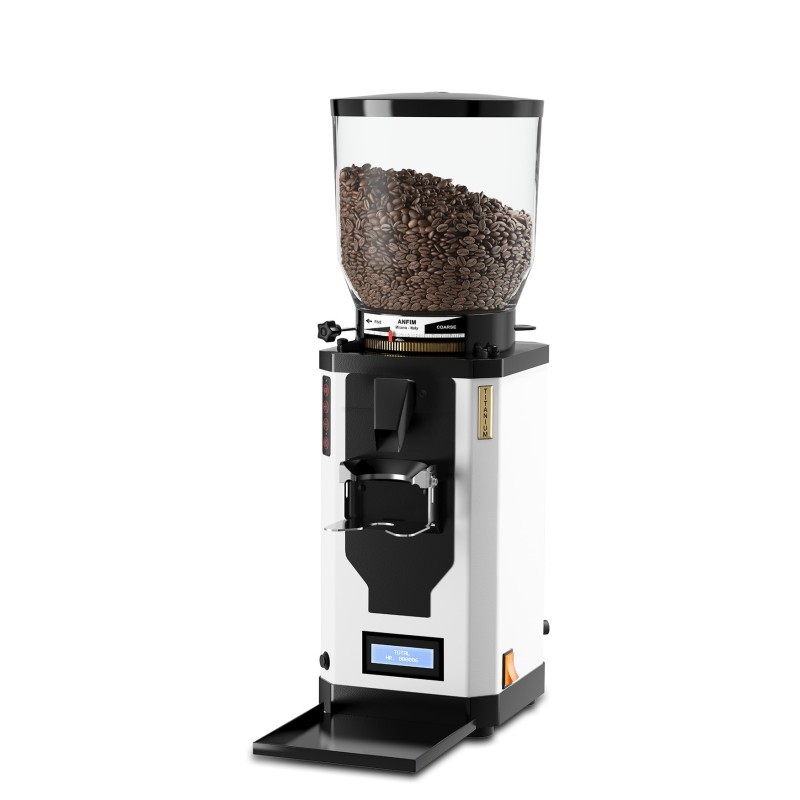
Rating: 4.5/5
Best For: medium to high-volume espresso shops
Strengths: Strong motor, low retention, titanium burrs, peaceful running
How to select best coffee grinder for commercial use?
The beauty of coffee shops is that none two are exactly the same. The following can help you determine which grinder best fits your configuration:
1) Know Your Workflow
- Do you handle more than three hundred cups daily?
- Mostly espresso or mixed techniques (drip, pour-over, cold brew)?
- Are several of your baristas side by side?
2) Practice Fiscal Responsibility
Don’t grind cheap outs using a grinder. Although you could have the nicest espresso maker, a poor grinder will waste it. Consider this as a five to ten year investment.
3) Test Before You Buy
Always take demo first. Listens to it, feels the grind, dial it in. If it’s ‘the one’ then you will know the right away.
4) Think about future proofing
Choose a grinder that expands with your company. Perhaps now you do not require programmed multi-dose settings; but, in a year you might.
Emotional Side of the Grind: What Consumers Ignorantly Miss
Grounding coffee is a real art. it’s a 5 AM ritual when you silently calibrate the machine before the business opening. That moment of ugh when you discovered your grind drifted over night? That delight when the caramel crema crowned shot runs at 28 seconds.
These are the things only those of us who live and drink coffee can know. It’s not only a machine, it’s your buddy partner, it learns your cafe. On a hectic morning, that one item always makes sense.
Maintenance Advice to Keep Your Commercial Grinder Running Perfect
- Clean daily: particularly with reference to the burrs and chute
- Weekly vacuum hopper and doser
- Once a week use Grindz or a comparable burr cleaning
- Every six months, verify burr alignment
- Based on volume replace burrs. For instance, titanium ones can weigh over 1,000 kg while steel burrs might last 500–700 kg.
Keep in mind: The cleaner your grinder is, the better your coffee tastes.
Often Asked Questions (FAQs)
1) Best kind of burr for espresso?
For espresso, flat burrs provide more consistency just what you want. While conical burrs are rather more forgiving and quieter, they usually provide more clarity and a balanced profile.
2) How often i have to change my grinder burrs?
It varies depending on your usage:
- 500–700 kg of beans for steel burrs
- 1,000–1,200 kg for titanium burrs
- Expect replacements every 1–1.5 years if you pull 200 shots a day.
3) In a business environment, can one grinder run espresso and filter coffee?
Technically yes, but not quite ideally. Various brew techniques call for varied grind sizes. For brew bar use, separate grinders or a multifunctional grinder like the Baratza Forte are preferable choices.
4) For espresso, what grind settings shall i use?
You want fine grounds, somewhat coarser than powdered sugar. Turn on flavor and time dial in. For 18–20 grams in, a normal shot should run 25 to 30 seconds, for 36–40 grams out, same.
5) Shall I purchase a used commercial grinder?
Indeed, if it comes from a reliable source and is kept well-maintained. Just note:
- Burr condition
- Motor performance
- Grind consistency
- Service history
Remember that new burrs alone may cost you $100–$400.
Final Verdict:
One word would be trust to sum up the finest commercial coffee grinder. At 7:58 AM when the cafe doors open, you trust this machine. The instrument you turn to when your trainee barista requires a little assistance.
Grinders are more than just appliances. Their soul is your coffee program. Choose wisely, take care of it, and you will be rewarded with daily, cup after cup, constant quality.

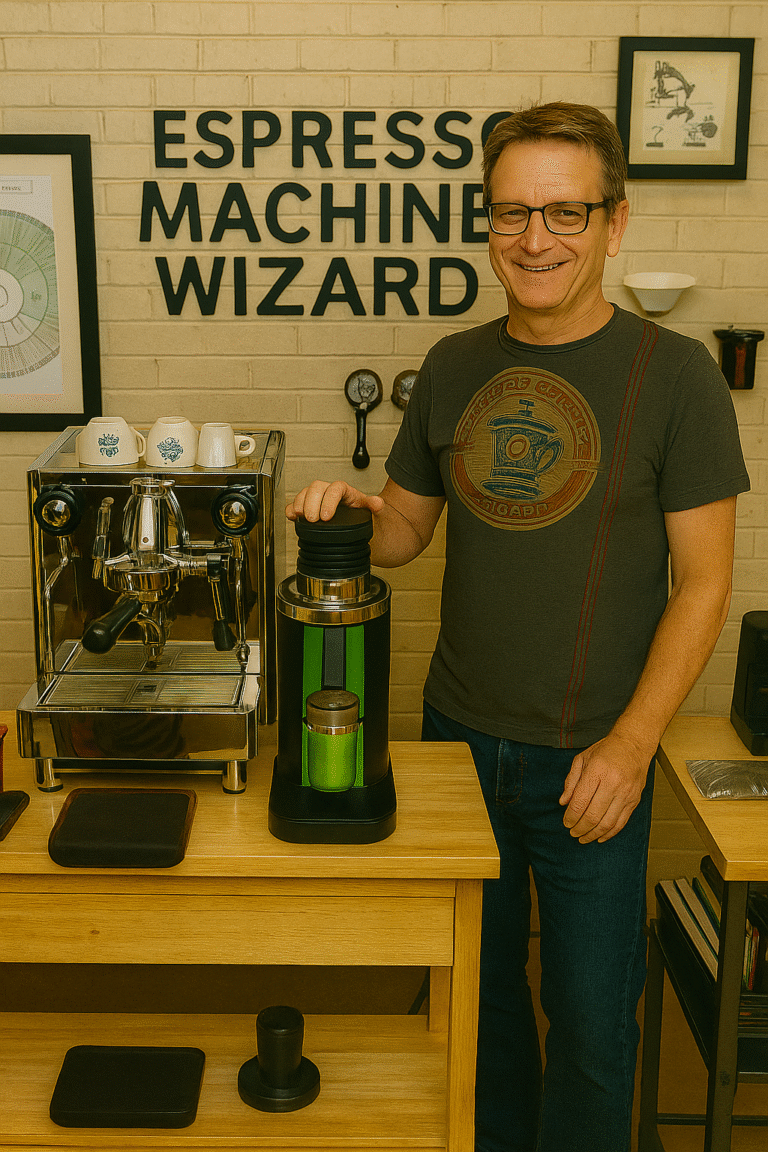
Kevin Marshal is the founder and primary writer for Espressomachinewizard.com. His passion for rich, high-quality espresso began during a semester abroad in Italy more than 15 years ago. What began as a pleasant daily practice quickly evolved into an obsession with perfecting espresso at home.
Kevin has spent years researching espresso machines, tasting beans from renowned roasters, and experimenting with various brewing methods. His objective is to help others understand the often-overwhelming world of home espresso. Kevin's goal is to make cafe-quality espresso available to everyone, from machine recommendations to shot-making advice.
Kevin lives in San Francisco, California with his wife, kid, and two rescue dogs, all of whom have refined preferences in espresso drinks!
- Multi-Level Aroma G3 vs. P.A.G.2: Discover the Best Jura Grinder for Your Machine - December 6, 2025
- Best 5 Commercial Coffee Grinders for Cafes & Baristas - December 6, 2025
- Philips 4400 Review: LatteGo Espresso Machine | Comparisons Included - October 8, 2025




2 Comments